Learn
Sports recovery, explained
Training doesn't make you fitter on its own. It creates fatigue and small amounts of damage. You get fitter while you recover, as the body repairs and adapts. Recovery is the second half of training, not time off from it.
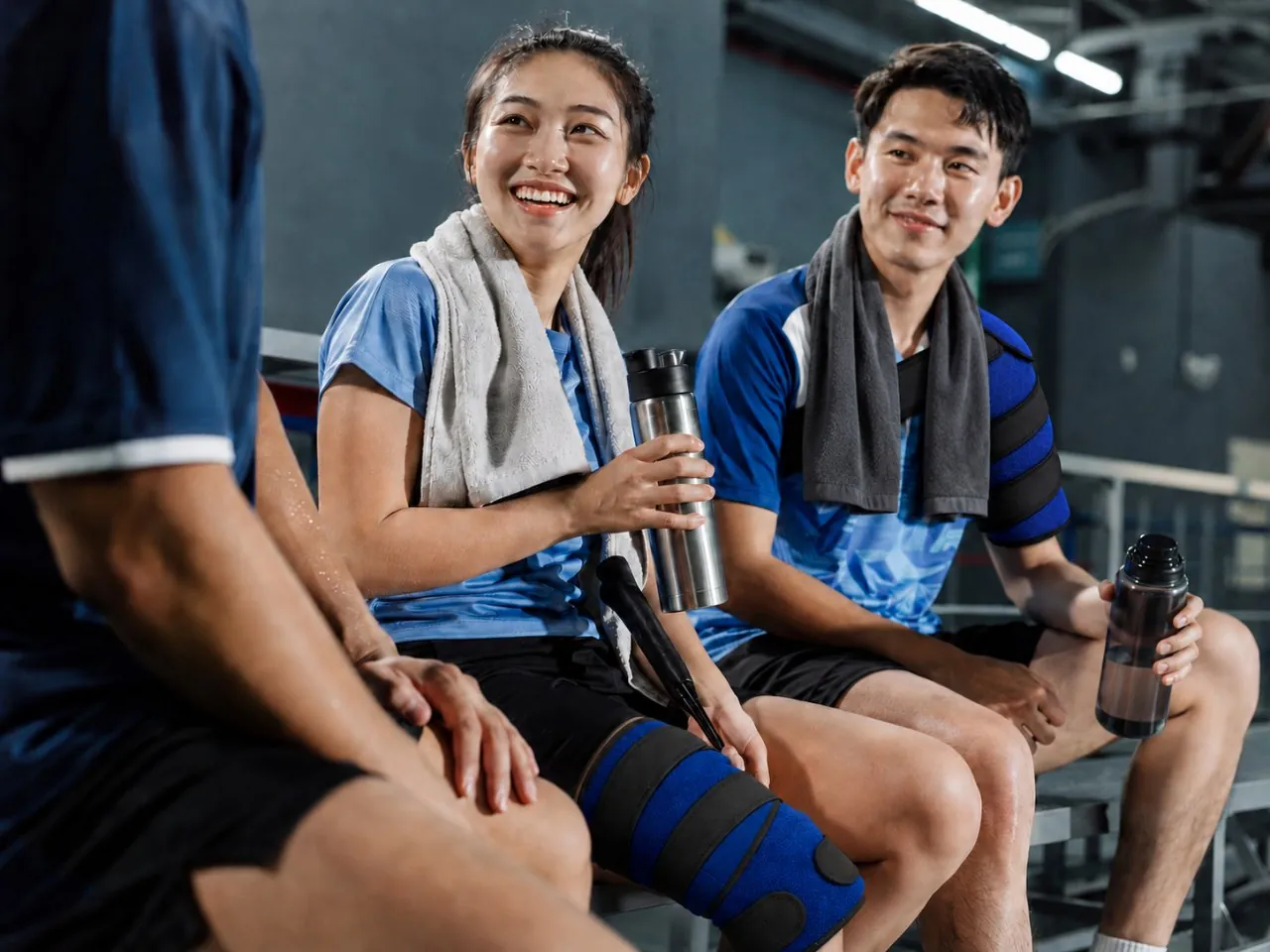
General information, not medical advice. For an injury, or pain that is severe or not improving, see a doctor or physiotherapist.
Recovery is the period after exercise when your body refuels, repairs muscle and adapts to the training. Enough recovery means you start the next session stronger. Too little, and fatigue builds up instead: performance stalls, soreness lingers and injury risk rises.
Why recovery matters
Think of training as tearing a page and recovery as taping it back stronger. Train again before the tape has set, and you tear it again in the same place.
Do that for weeks and you get more tired, not more fit.
Exercise is a stress. In the hours and days after a session the body restores fuel stores, repairs muscle fibres and builds new proteins, often to a slightly higher level than before. Coaches call this supercompensation.
It's a simplified model, but it captures the key idea that sports-medicine consensus also stresses: training works only when overload is matched by enough recovery.[1]
Recovery vs no recovery
| Enough recovery | Not enough recovery | |
|---|---|---|
| Next session | You start fresh and can train hard | You start tired and quality drops |
| Progress over weeks | Fitness and strength climb | Progress stalls, then can go backwards |
| Soreness | Fades within a few days | Lingers and stacks up |
| Sleep and mood | Normal | Poor sleep, irritability, low motivation |
| Injury risk | Lower | Higher |
| Worst case | None | Overtraining syndrome: months of fatigue and poor performance |
Long-term under-recovery has a name. The 2013 European and American sports medicine consensus describes a spectrum: short, planned overload that you bounce back from (functional overreaching), longer slumps of weeks (non-functional overreaching), and overtraining syndrome, where performance and mood can take months to return.[1] Overtraining symptoms →
What happens in your body after training
Your body doesn't recover all at once. Breathing and heart rate settle soon after you stop. Refuelling takes about a day. Rebuilding muscle takes a day or two more. That's why you can feel fine an hour after training and still be sore two days later.
The cardiovascular and respiratory systems recover in the first period after exercise, and blood lactate is cleared faster with light activity.[2] Muscle glycogen restoration continues for up to about 24 hours, driven by carbohydrate intake.[3] After resistance exercise, muscle protein synthesis was 112% above rest at 3 hours, 65% at 24 hours and still 34% at 48 hours.[4] Delayed-onset muscle soreness (DOMS) appears 1–5 days after unaccustomed exercise.[6][5]
The five pillars of recovery
Where cooling fits
Cooling is one tool, not the whole toolbox. It's best at making you feel better: less sore, less achy, fresher for the next session. It doesn't replace sleep, food or rest days.
A Cochrane review found that cold water immersion after exercise reduced muscle soreness ratings compared with resting, from 24 to 96 hours afterwards, though the evidence quality was low.[8] Cold works mainly by cooling tissue, narrowing blood vessels and slowing nerve signals.[9][10] If your main goal is building muscle size, research suggests avoiding regular whole-body cold immediately after every strength session.[11]
Start here
Questions
Why is recovery important in sport?
Because you adapt and get fitter during recovery, not during the training itself. Without enough recovery, fatigue builds up, performance stalls and the risk of injury rises.
How long does it take to recover after a workout?
It depends on the session. Heart rate and breathing settle within an hour, muscle fuel refills in about a day with enough carbohydrate, and muscle repair can continue for up to about two days. Soreness after a new or very hard session usually peaks at 24 to 72 hours.
What are the signs of not recovering enough?
Persistent tiredness, performance that stalls or drops, soreness that doesn't fade, poor sleep, irritability and low motivation. If these last for weeks, reduce your training and speak to a coach or doctor.
Does cooling help recovery?
Cooling reduces how sore you feel after hard exercise and can help you feel fresher between sessions. It is one part of recovery alongside sleep, nutrition and sensible training load.
What is active recovery?
Light, easy movement such as walking, gentle cycling or swimming on rest or easy days. It keeps you moving without adding much fatigue.
References
- Meeusen R, Duclos M, Foster C, et al. Prevention, diagnosis, and treatment of the overtraining syndrome (ECSS/ACSM joint consensus). Medicine & Science in Sports & Exercise, 2013. doi.org/10.1249/MSS.0b013e318279a10a
- Van Hooren B, Peake JM. Do we need a cool-down after exercise? A narrative review of the psychophysiological effects and the effects on performance, injuries and the long-term adaptive response. Sports Medicine, 2018. doi.org/10.1007/s40279-018-0916-2
- Burke LM, van Loon LJC, Hawley JA. Postexercise muscle glycogen resynthesis in humans. Journal of Applied Physiology, 2017. doi.org/10.1152/japplphysiol.00860.2016
- Phillips SM, Tipton KD, Aarsland A, Wolf SE, Wolfe RR. Mixed muscle protein synthesis and breakdown after resistance exercise in humans. American Journal of Physiology, 1997. doi.org/10.1152/ajpendo.1997.273.1.E99
- Cheung K, Hume P, Maxwell L. Delayed onset muscle soreness: treatment strategies and performance factors. Sports Medicine, 2003. doi.org/10.2165/00007256-200333020-00005
- Armstrong RB. Mechanisms of exercise-induced delayed onset muscular soreness: a brief review. Medicine & Science in Sports & Exercise, 1984. pubmed.ncbi.nlm.nih.gov/6392811/
- Milewski MD, Skaggs DL, Bishop GA, et al. Chronic lack of sleep is associated with increased sports injuries in adolescent athletes. Journal of Pediatric Orthopaedics, 2014. doi.org/10.1097/BPO.0000000000000151
- Bleakley C, McDonough S, Gardner E, et al. Cold-water immersion (cryotherapy) for preventing and treating muscle soreness after exercise. Cochrane Database of Systematic Reviews, 2012. doi.org/10.1002/14651858.CD008262.pub2
- Malanga GA, Yan N, Stark J. Mechanisms and efficacy of heat and cold therapies for musculoskeletal injury. Postgraduate Medicine, 2015. doi.org/10.1080/00325481.2015.992719
- Algafly AA, George KP. The effect of cryotherapy on nerve conduction velocity, pain threshold and pain tolerance. British Journal of Sports Medicine, 2007. doi.org/10.1136/bjsm.2006.031237
- Roberts LA, Raastad T, Markworth JF, et al. Post-exercise cold water immersion attenuates acute anabolic signalling and long-term adaptations in muscle to strength training. Journal of Physiology, 2015. doi.org/10.1113/JP270570
Recoolvery+
Cooling for your recovery routine
Not an ice pack. Freezable HypoCarbon® pads in a hands-free wrap for the knee, shoulder, elbow, ankle and back. HypoCarbon® conducts heat 15× better than ice. Cold only, no heating.
See the Recoolvery+ Wrap