Learn · Cold vs heat
Ice or heat? When to use each
Cold and heat do opposite things to your body, so choosing the wrong one can make you feel worse. Here's a simple rule, the science behind it, and which to use for the most common situations.
General information, not medical advice. For an injury, or pain that is severe or not improving, see a doctor or physiotherapist.
Use cold for anything new, swollen or hot, and straight after hard training. Use heat for stiffness, tight muscles and old, ongoing aches without swelling, and consider it for muscle soreness a day or two after training. Never put heat on a fresh injury: the NHS advises avoiding heat for the first couple of days after a sprain or strain.[1][2]
What cold and heat do
Cold calms things down. It slows blood flow and numbs the area, which helps with fresh pain and swelling.
Heat opens things up. It brings more blood to the area and helps tight muscles relax, which helps with stiffness. That's also why heat on a fresh, swollen injury can make the swelling worse.
Cold reduces pain, blood flow, swelling, inflammation, muscle spasm and metabolic demand. Heat relieves pain and increases blood flow, metabolism and the elasticity of connective tissue.[2] Cooling also slows nerve conduction.[3] Because heat increases blood flow, it is avoided in the first days after an acute soft-tissue injury.[1]
Ice or heat for common situations
| Situation | Use | Why |
|---|---|---|
| Sprained ankle (first 2–3 days) | Cold | Eases pain. The NHS advises avoiding heat for the first couple of days to help prevent swelling[1] |
| Swollen knee after a game | Cold | Swelling and heat in the area call for cooling |
| Straight after a hard session | Cold | Reduces soreness ratings over the following days[4] |
| Sore muscles 1–3 days later (DOMS) | Heat, or gentle movement | Trials found a heat wrap gave more DOMS pain relief than cold[2] |
| Stiff back in the morning, no injury | Heat | Heat increases connective tissue elasticity; heat wraps reduced pain in acute low back pain trials[2] |
| Tight muscles before training | Heat, then a warm-up | Cold right before activity can leave muscles feeling stiff |
| An old, ongoing ache without swelling | Heat | Increases blood flow and eases tightness[2] |
If you're not sure, or the pain is severe, keeps getting worse, or you can't use the limb, stop and get it checked by a doctor or physiotherapist.
How long to use them
- Cold: the NHS suggests up to 20 minutes every 2 to 3 hours for a sprain or strain, wrapped, never directly on bare skin.[1]
- Heat: keep it warm, not hot, and limit the time to avoid burns. Never use heat while sleeping.
- Either: stop if the skin becomes numb, blistered, very red or painful.
Recoolvery+ is for cold only
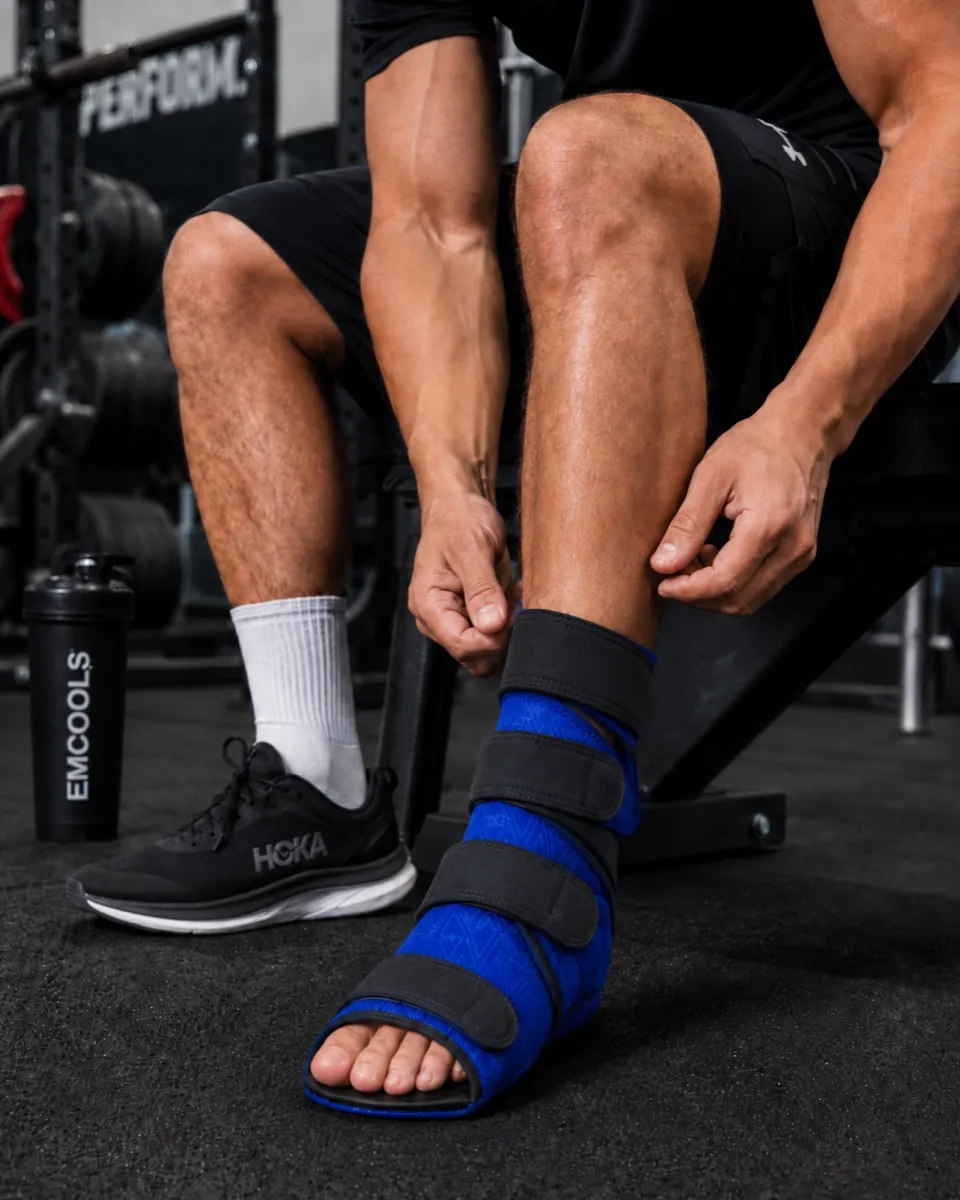
Recoolvery+ is not an ice pack and not a hot pack. It's a cooling recovery wrap: freezable HypoCarbon® pads that conduct heat 15× better than ice,[5][6] held on hands-free by three straps.[7] The pads go in the freezer, never the microwave or hot water. Use it in the "cold" situations above: after hard training, and for hot, achy joints after sport.
Questions
Should I use ice or heat?
Use cold for new injuries, swelling, hot or red areas, and straight after hard exercise. Use heat for stiffness, tight muscles and old aches without swelling. Avoid heat on a fresh injury.
Is ice or heat better for sore muscles?
Straight after hard exercise, cold reduces how sore you feel over the following days. For soreness that has already set in a day or two later (DOMS), trials found a heat wrap gave more pain relief than cold. Gentle movement also helps.
Should I use heat or ice on a sprained ankle?
Cold. The NHS recommends an ice pack wrapped in a towel for up to 20 minutes every 2 to 3 hours, and advises avoiding heat for the first couple of days to help prevent swelling.
Can heat make an injury worse?
Yes, on a fresh injury. Heat increases blood flow, which can increase swelling in the first days after a sprain or strain.
Can I heat the Recoolvery+ pads?
No. Recoolvery+ is designed for cold only. Keep the pads in the freezer and never microwave them or put them in hot water.
References
- NHS. Sprains and strains. www.nhs.uk/conditions/sprains-and-strains/
- Malanga GA, Yan N, Stark J. Mechanisms and efficacy of heat and cold therapies for musculoskeletal injury. Postgraduate Medicine, 2015. doi.org/10.1080/00325481.2015.992719
- Algafly AA, George KP. The effect of cryotherapy on nerve conduction velocity, pain threshold and pain tolerance. British Journal of Sports Medicine, 2007. doi.org/10.1136/bjsm.2006.031237
- Bleakley C, McDonough S, Gardner E, et al. Cold-water immersion (cryotherapy) for preventing and treating muscle soreness after exercise. Cochrane Database of Systematic Reviews, 2012. doi.org/10.1002/14651858.CD008262.pub2
- HypoCarbon® thermal conductivity (35.0 W/m·K): Global Healthcare SG in-house testing of the proprietary formulation. Unpublished company data, available to clinical and trade partners on request.
- Slack GA. Thermal conductivity of ice. Physical Review B, 1980. doi.org/10.1103/PhysRevB.22.3065
- Recoolvery+ product specifications and care guide: session length, refreeze time, pad life and materials. recoolvery.com/products/recoolvery-wrap
Recoolvery+
Cooling for your recovery routine
Not an ice pack. Freezable HypoCarbon® pads in a hands-free wrap for the knee, shoulder, elbow, ankle and back. HypoCarbon® conducts heat 15× better than ice. Cold only, no heating.
See the Recoolvery+ Wrap